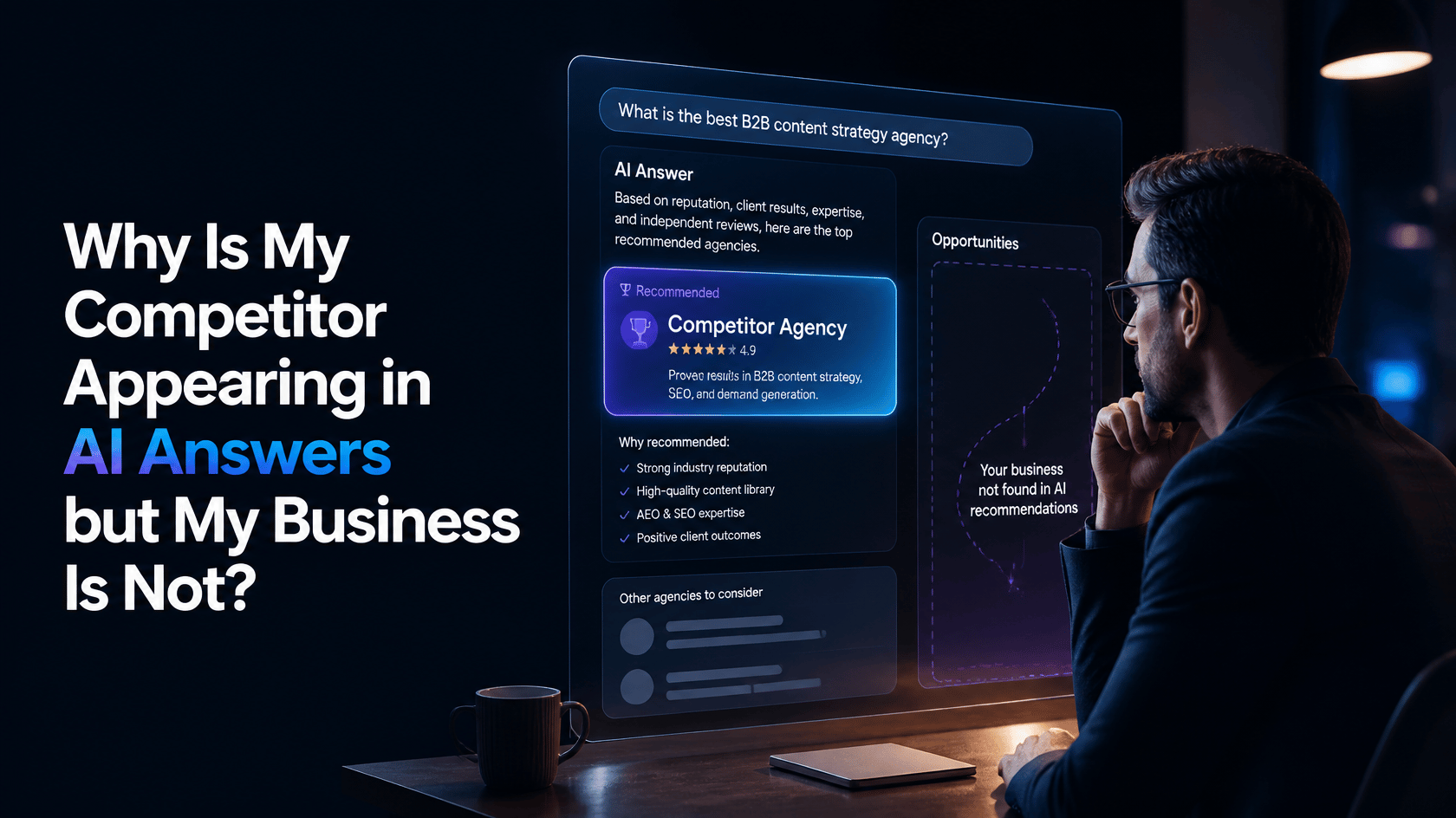

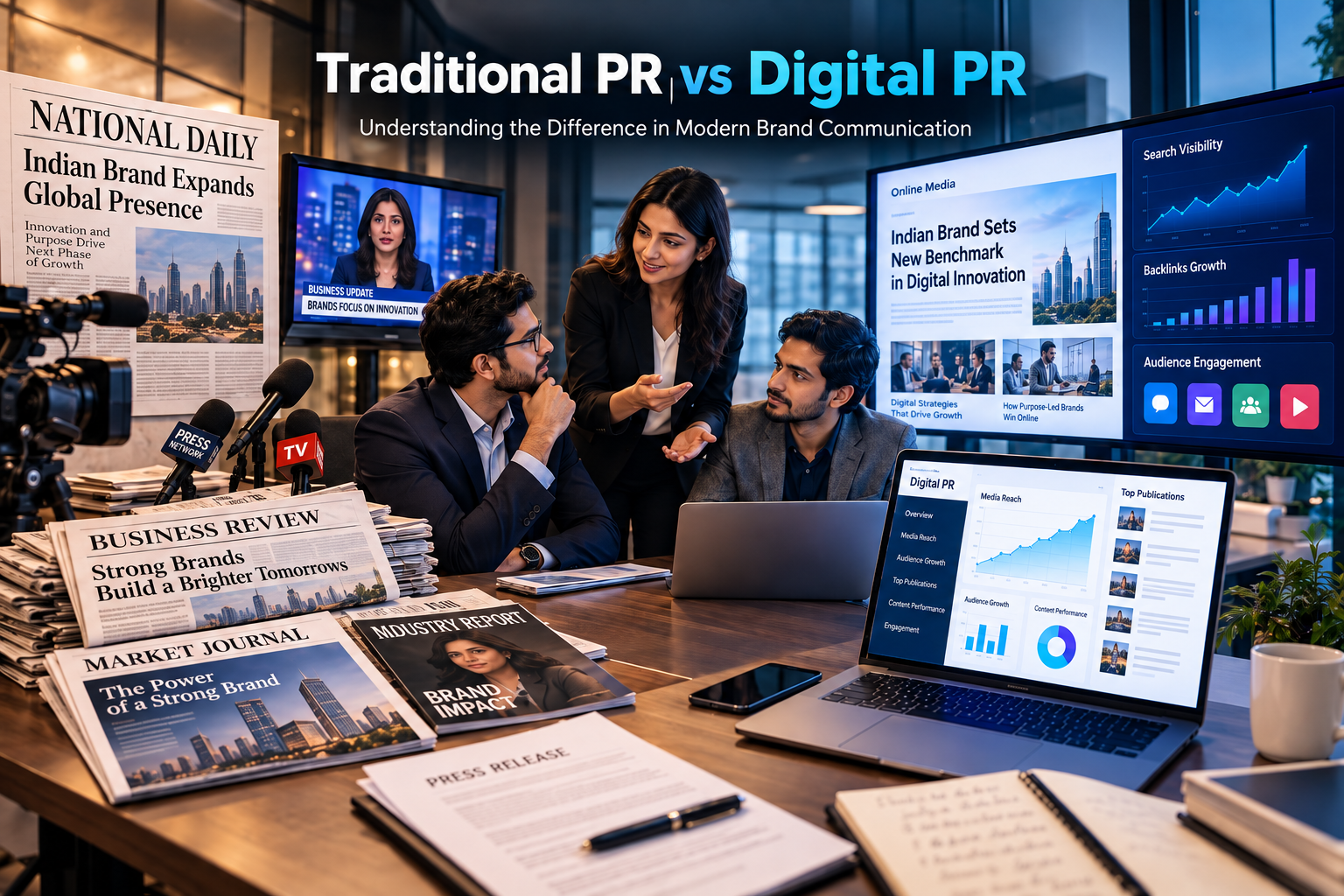
Traditional PR earns coverage in newspapers, magazines, TV and radio. Digital PR earns coverage on news sites, blogs, podcasts and social platforms, and it is judged by links, search visibility and online engagement along with reach. Both rely on earned attention instead of paid ads. The real difference is where the story appears, how you measure it and how long it keeps working.
That distinction matters when you compare public relations services, because the right choice depends on who you want to reach and what you want them to do afterwards.
Traditional PR vs Digital PR at a Glance
| Traditional PR | Digital PR | |
|---|---|---|
| Main channels | Print, TV, radio, events | Online news, blogs, podcasts, social media |
| Success measures | Circulation, audience reach, mentions | Backlinks, referral traffic, search visibility, engagement |
| Shelf life | A printed issue or broadcast slot | Stays online and can be found through search |
| Feedback speed | Slower, often tracked manually | Quicker, visible in analytics |
How Traditional PR Works
It centres on press releases, media relations, press conferences, spokespeople and event coverage. Its strength is credibility with decision-makers and offline audiences. It suits launches, funding announcements, leadership profiles and statements during a difficult moment.
How Digital PR Works
Digital PR pitches data-led stories, expert comments and guest articles to online publishers, then amplifies the coverage through social channels. Mentions often link back to your website. Because the content stays online, search engines and AI assistants can find it when people ask about your brand or category.
Where the Two Overlap
Most print coverage now has an online version, so one story can serve both. Use that. Share every mention on your own channels, and keep your brand name and one-line description consistent across articles. Consistency helps readers, search engines and AI tools recognise who you are.
Which One Does Your Business Need?
Before choosing public relations services, write down your audience and the action you want from them.
- Offline-heavy or local reputation goals: lean towards traditional PR.
- Online-first brands and e-commerce founders: lean towards digital PR.
- Most growing businesses: a mix, with the weighting based on where your customers read and search.
Where Agencies Fit
A digital media marketing agency can connect PR with SEO, content and paid campaigns, so a mention supports your wider plan instead of sitting alone.
A social media marketing agency in Noida is often useful for amplifying coverage and handling audience response. Aiimstorms is a digital marketing company serving businesses in Delhi and Noida.
Questions to Ask Before You Hire
- Which publications or platforms do you realistically target for my category?
- How will you report results beyond the number of mentions?
- Who writes the pitches and the content?
- How does PR connect with my website and social channels?
Common Mistakes to Avoid
- Chasing coverage with no goal. Know whether you want trust, traffic or leads.
- Sending generic press releases. Editors respond to relevant, specific stories.
- Ignoring your own website. Coverage sends people there, so it must be ready.
- Counting mentions only. Track referral traffic and enquiries too.
Final Thoughts
Traditional and digital PR are not rivals. They reach different audiences through different channels, and the best results come from deciding who needs to hear your story first. List your top three audiences, note where each one reads and searches, and build your plan from that list.