
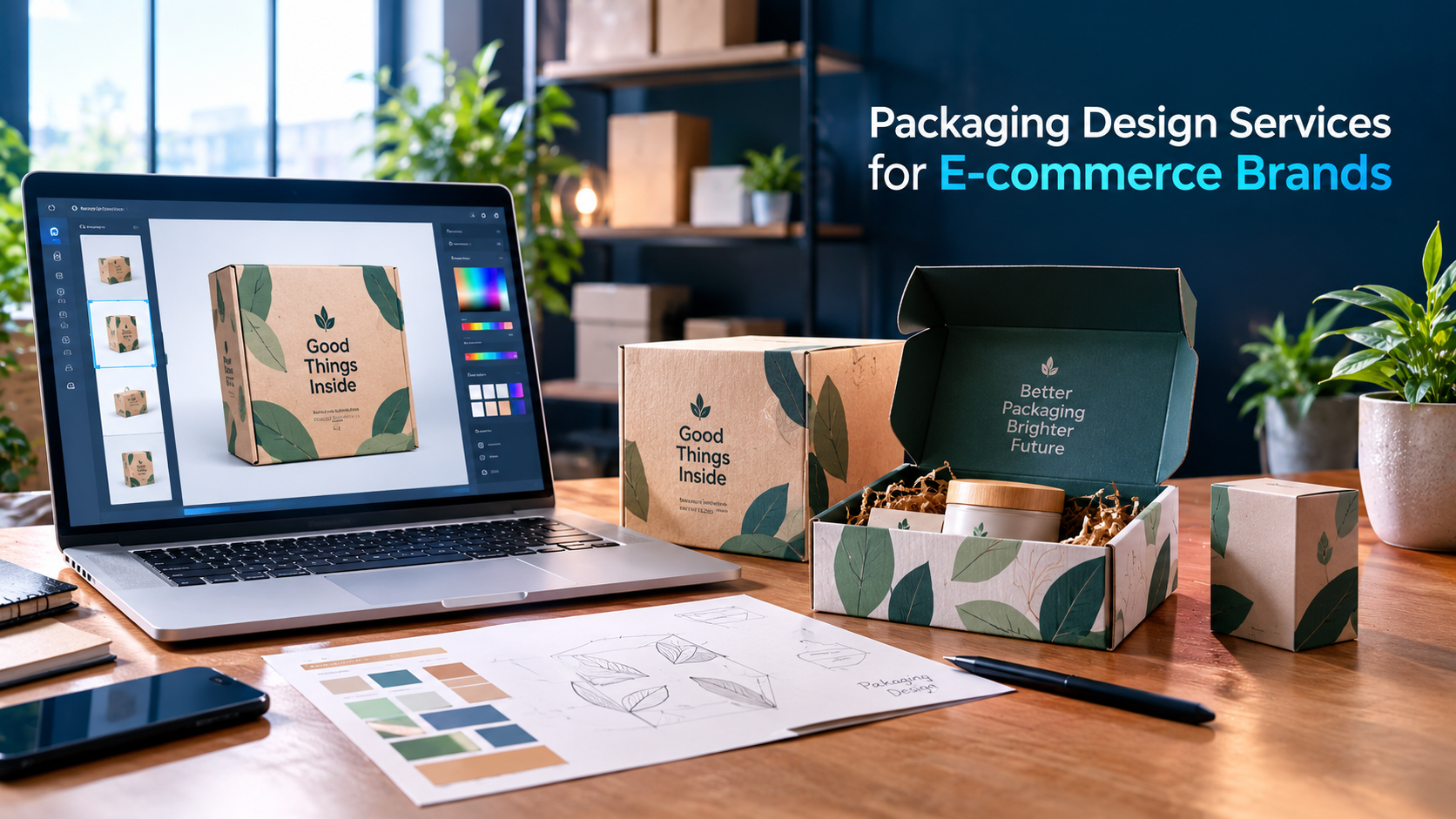
Customers can’t touch your product before they buy online, so the box does the introducing. It is the first physical contact with your brand, and it either backs up the promise made on your website or quietly weakens it.
Packaging design services for e-commerce brands cover the structure, graphics, materials and unboxing details of everything a customer receives: the shipping carton, the product pack, inserts and labels. The aim is simple. Protect the product in transit, look consistent with your brand, and give the customer a reason to trust you and reorder.
How Is E-commerce Packaging Different From Retail Packaging?
Retail packs compete on a shelf, so front-of-pack impact matters most. E-commerce packs are judged at the customer’s doorstep, after a courier journey. That changes the brief:
- Durability comes first. Boxes get dropped, stacked and squeezed.
- Size affects shipping. Oversized cartons add cost and need extra filler.
- Unboxing gets shared. Customers photograph what they open, so the inside deserves design too.
- Returns need planning. Easy-open, resealable packs make returns less painful.
What to Decide Before Design Begins
Before you brief any packaging design services provider, settle the basics. A vague brief usually means extra revision rounds.
- Product dimensions, weight and fragility
- How it ships: local courier, national carrier or a marketplace warehouse
- Who your customer is and how the unboxing should feel
- Label details required for your product category, such as ingredients, batch information or usage warnings (check the rules that apply to your category)
- Sustainability preferences, including recyclable materials and less plastic
Having these answers ready also makes quotes easier to compare.
Why the Print Method Matters
Print choice affects flexibility and timelines. Short runs, seasonal editions and several product variants are where a digital printing agency can help, because design changes don’t need new plates. Larger repeat orders of a single design may suit other methods better, so ask your printer which route fits your volume.
Whatever you choose, request a printed sample on the actual board or paper stock. Colours on a screen rarely match colours on corrugated cardboard.
Inserts and Brochures Deserve Attention Too
The box is only part of the experience. A thank-you card, care instructions or a small product guide shows you thought beyond the sale. Brochure designing services are useful here, since a folded leaflet or mini catalogue can introduce other products in your range.
Keep inserts light and relevant. A cluttered insert feels like an advert instead of a welcome.
How to Choose a Design Partner
Look for a team that asks about your shipping process before it opens a design tool. Useful questions:
- Can you work from my exact product dimensions and test a physical mock-up?
- Who prepares print-ready files and coordinates with the printer?
- Will the packaging match my website, social pages and ads?
- How many revisions are included, and how are changes handled?
Packaging should also look like the same brand your customers saw online. Working with a Delhi or Noida digital marketing company such as Aiimstorms can help keep packaging consistent with your website and campaigns.
Common Mistakes to Avoid
- Designing for the screen render, not the courier. A pack that looks great in a mock-up can arrive crushed.
- Approving artwork without a physical sample. Colours, fit and finish only show up in hand.
- Ignoring box size. Extra space means extra shipping cost and more filler.
- Overloading with text. Keep the front simple and put details where they’re needed.
- Treating packaging as separate from the brand. Fonts, colours and tone should match everything else you publish.
Final Thoughts
Good packaging works like quiet marketing. It protects the product, backs up your brand and gives customers something worth sharing. Order your own product the way a customer would, note where the experience falls short, and fix the biggest gap first.